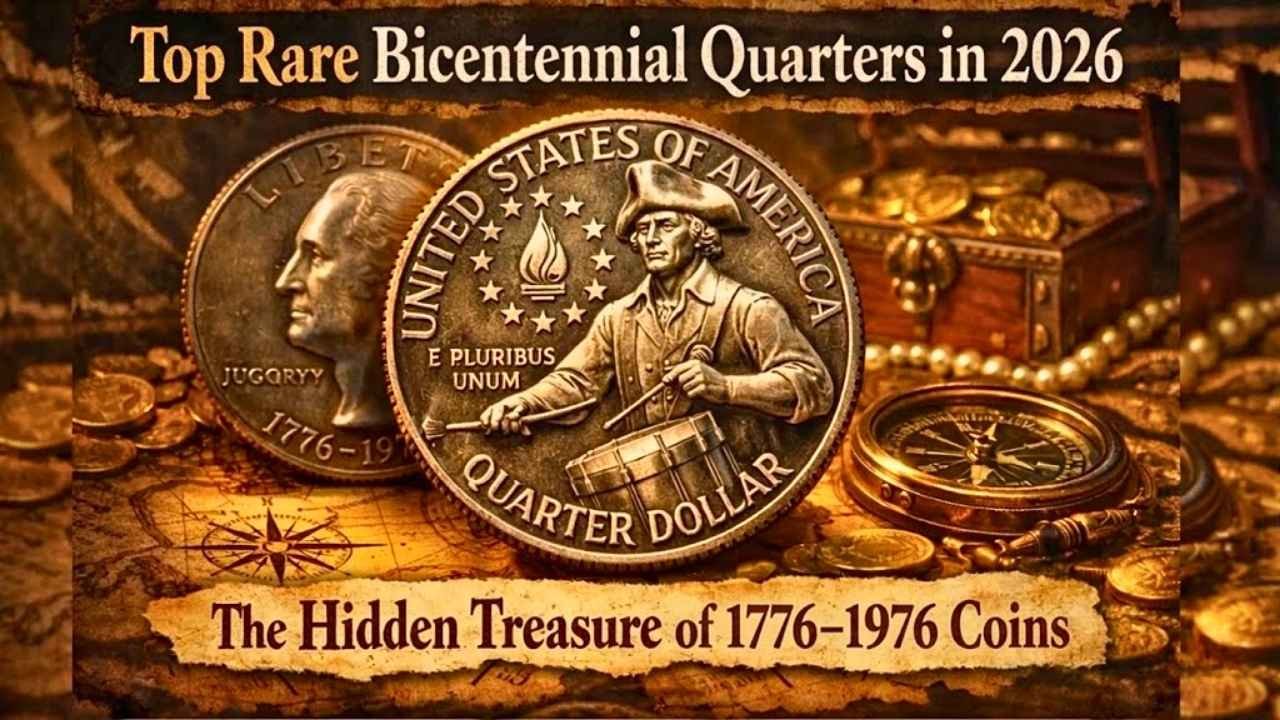
The 1776–1976 Bicentennial quarter is one of the most recognizable coins in American history. Minted to celebrate the 200th anniversary of the nation’s independence, it features a colonial drummer on the reverse and the dual date “1776–1976.” While most Bicentennial quarters are common and circulate at face value, certain rare varieties, silver issues, and minting errors have become highly valuable. In 2026, these coins continue to attract collectors and investors, with some examples worth hundreds or even thousands of dollars.
Historical Background
The Bicentennial quarter was part of a special coinage program that included quarters, half dollars, and dollars. Each coin featured a unique reverse design commemorating America’s bicentennial. The quarter’s reverse, designed by Jack L. Ahr, depicts a colonial drummer with a torch surrounded by thirteen stars. These coins were struck in both copper-nickel clad and 40 percent silver compositions, making them distinctive among U.S. coinage.
Design and Symbolism
The obverse of the Bicentennial quarter retains George Washington’s portrait, while the reverse shows the colonial drummer. The design symbolizes patriotism, independence, and the spirit of 1776. Collectors admire the artistry and historical significance of the coin, which connects modern numismatists to America’s bicentennial celebrations.

Silver Bicentennial Quarters
One of the most valuable varieties is the 40 percent silver Bicentennial quarter. These coins were struck for collector sets and are distinguishable by their composition. In 2026, silver Bicentennial quarters remain highly prized, with values ranging from a few dollars for circulated examples to hundreds for pristine, uncirculated coins.
Error Varieties
Error coins add another layer of rarity. Bicentennial quarters with off-center strikes, double dies, and planchet errors are highly collectible. These coins demonstrate the unpredictability of minting and the excitement of discovery. In 2026, error Bicentennial quarters remain popular among specialists, often selling for hundreds or more depending on rarity and condition.
Double Die Reverse
One of the most famous Bicentennial quarter errors is the double die reverse. Doubling is visible on the inscriptions and design elements, making it a striking variety. In 2026, high-grade examples continue to command strong prices, often reaching thousands.
Off-Center Strikes
Off-center strikes are another rare error. These coins show the design shifted away from the center, creating a unique appearance. Collectors value these errors for their rarity and visual appeal. In 2026, off-center Bicentennial quarters remain desirable, with values ranging from hundreds to thousands depending on the degree of misalignment.
Proof Issues
Proof Bicentennial quarters struck at the San Francisco Mint are another area of interest. These coins feature sharp details and mirror-like surfaces, making them attractive to collectors. Silver proof issues are especially valuable. In 2026, proof Bicentennial quarters continue to command premiums over face value.
Market Value in 2026
The value of Bicentennial quarters in 2026 depends on rarity, condition, and demand. Common circulated examples are worth only face value, but rare varieties, silver issues, and error coins can command impressive prices. Auction records show consistent appreciation for top rarities, with some coins selling for thousands. Professional grading and authentication remain essential for maximizing value.

Collecting Strategies
For collectors, building a Bicentennial quarter collection offers both enjoyment and investment potential. Searching through proof sets, mint sets, and circulation can yield valuable finds. Investing in professionally graded coins ensures authenticity and maximizes value. Proper storage in coin holders or albums helps preserve condition. Networking with other collectors and staying informed about auction results ensures awareness of market trends.
Historical and Cultural Significance
The Bicentennial quarter holds cultural importance beyond its monetary value. It symbolizes America’s 200th anniversary and celebrates the nation’s independence. For collectors, it represents artistry, heritage, and patriotism. The coin connects modern numismatists to the history of the U.S. Mint, reminding us that numismatics is not only about value but also about cultural recognition.
Investment Potential
Rare Bicentennial quarters have proven to be strong investments. Their values have appreciated over time, particularly for high-grade examples and rare varieties. Investors view them as tangible assets that combine cultural heritage with financial opportunity. For those seeking diversification, rare coins provide both stability and excitement. In 2026, Bicentennial quarters remain a promising area for collectors and investors alike.

Key Highlights
- The Bicentennial quarter was minted in 1975 and 1976 to celebrate America’s 200th anniversary.
- Designed by Jack L. Ahr, it features a colonial drummer on the reverse.
- Silver Bicentennial quarters are highly prized, especially proof issues.
- Rare varieties include double die reverses, off-center strikes, and planchet errors.
- Values in 2026 range from face value for common coins to thousands for rare varieties.
- Collecting strategies include focusing on rare issues, professional grading, and proper storage.
- The coin holds cultural importance as a symbol of America’s independence.
- Rare Bicentennial quarters offer strong investment potential.
Final Words
The Bicentennial quarter remains one of the most fascinating coins in American numismatics. While most examples are common, rare varieties and silver issues demonstrate the extraordinary value hidden in this historic series. In 2026, collectors continue to pursue these coins with passion, and investors recognize their potential as tangible assets. For collectors, the pursuit of Bicentennial quarters combines history, artistry, and the thrill of discovery. For investors, they offer proven appreciation and cultural significance. Ultimately, this coin reminds us that even the smallest piece of currency can hold immense meaning and value, ensuring its place in numismatic history for generations to come.