Lincoln pennies have fascinated collectors for more than a century. First introduced in 1909 to honor Abraham Lincoln’s 100th birthday, these coins have become one of the most collected series in American numismatics. While many pennies are common and circulate widely, certain years and varieties hold significant value. This guide explores the most valuable Lincoln pennies by year, offering insights into rare coins, hidden treasures, and their investment potential.
The Beginning of the Lincoln Penny
The Lincoln cent was designed by Victor David Brenner and marked a turning point in U.S. coinage by featuring a president’s portrait. The earliest issues included the famous 1909‑S VDB penny, a coin that remains one of the most sought‑after pieces in the series. With fewer than half a million minted, it quickly became a collector’s prize. The wheat ears reverse design continued until 1958, after which the Lincoln Memorial design was introduced in 1959, followed by the Union Shield design in 2010.
Key Early Dates
Several early Lincoln pennies stand out for their rarity and value. The 1914‑D penny is scarce in high grades, making it a cornerstone of collections. The 1922‑No D penny, an error coin from the Denver Mint, is another rarity that commands high prices. These coins highlight the importance of mint marks and production anomalies in determining value. Collectors often focus on these early years as they represent the foundation of Lincoln cent collecting.
Wartime Issues and Mid‑Century Rarities
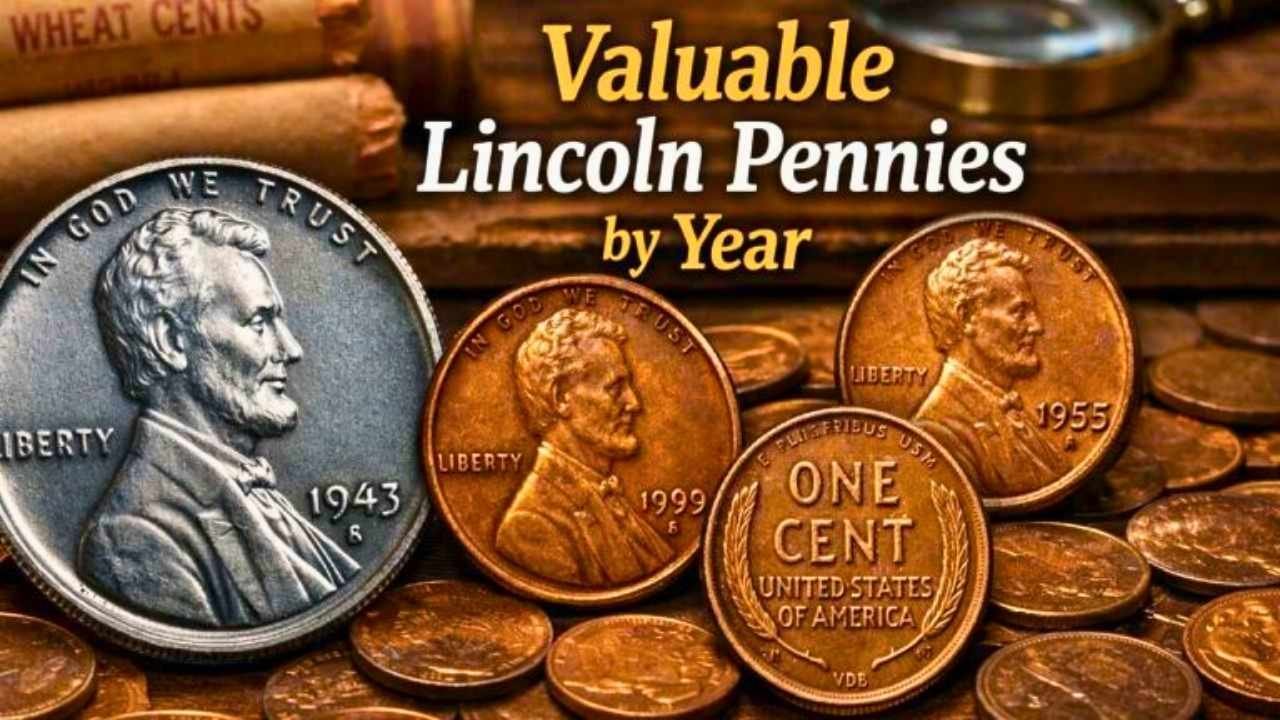
World War II brought unique changes to the Lincoln penny. In 1943, pennies were struck in steel coated with zinc to conserve copper for the war effort. While common in circulated condition, uncirculated examples are prized. Even more famous is the 1943 copper penny, a rare error that can sell for tens of thousands of dollars. The 1955 double die penny, with its dramatic doubling on the obverse lettering, remains one of the most iconic error coins in U.S. history.
Modern Varieties and Errors
Modern Lincoln pennies also offer hidden treasures. The 1969‑S double die obverse penny is extremely rare, with only a handful known. The 1972 double die penny and the 1983 double die reverse are popular among collectors for their striking errors. More recent varieties, such as the 1992 close AM and 1999 wide AM pennies, demonstrate that even coins from the last few decades can hold significant value. These modern rarities keep collectors engaged and searching through pocket change.
Value Factors and Investment Potential
The value of Lincoln pennies depends on several factors, including rarity, condition, and demand. Common circulated coins are worth face value, but uncirculated and proof examples can command higher prices. Error coins and key dates often sell for hundreds or even thousands of dollars. Professional grading adds credibility and can enhance value. For investors, Lincoln pennies offer tangible assets with historical significance, making them appealing additions to diversified collections.
Collecting Strategies
Building a valuable Lincoln penny collection requires knowledge and patience. Collectors should learn to identify key dates and varieties, as well as understand grading standards. Searching through rolls of pennies or inherited collections can yield surprising finds. Proper storage is essential to preserve condition, with coin holders and albums recommended. Networking with other collectors and staying informed about market trends helps maximize opportunities. Collecting should be enjoyable, combining the thrill of discovery with appreciation for history.
Cultural Importance of Lincoln Pennies
Beyond their monetary value, Lincoln pennies hold cultural significance. They symbolize respect for Abraham Lincoln and his legacy. For generations, they have been part of everyday life, often serving as a child’s first introduction to money. Collectors cherish them not only for rarity but also for the stories they tell about America’s past. Each penny, whether common or rare, represents a piece of history carried in the palm of the hand.

Key Highlights
- Lincoln pennies were first introduced in 1909 to honor Abraham Lincoln.
- Early rarities include the 1909‑S VDB, 1914‑D, and 1922‑No D pennies.
- Wartime issues include the 1943 steel cent and the rare 1943 copper penny.
- Iconic error coins include the 1955 double die and 1969‑S double die.
- Modern varieties such as the 1992 close AM and 1999 wide AM remain valuable.
- Value depends on rarity, condition, and demand, with graded coins commanding higher prices.
- Collecting strategies include roll searching, proper storage, and market research.
- Lincoln pennies hold cultural importance as symbols of history and everyday life.
Final Words
Lincoln pennies remain one of the most fascinating areas of coin collecting. From early rarities to modern errors, they offer endless opportunities for discovery and investment. Their enduring popularity reflects both their historical importance and the excitement of finding hidden treasures. For collectors, each penny tells a story, whether it is a common coin from pocket change or a rare variety worth thousands. In 2026 and beyond, Lincoln pennies will continue to inspire collectors and investors alike, proving that even the smallest coin can hold immense value.