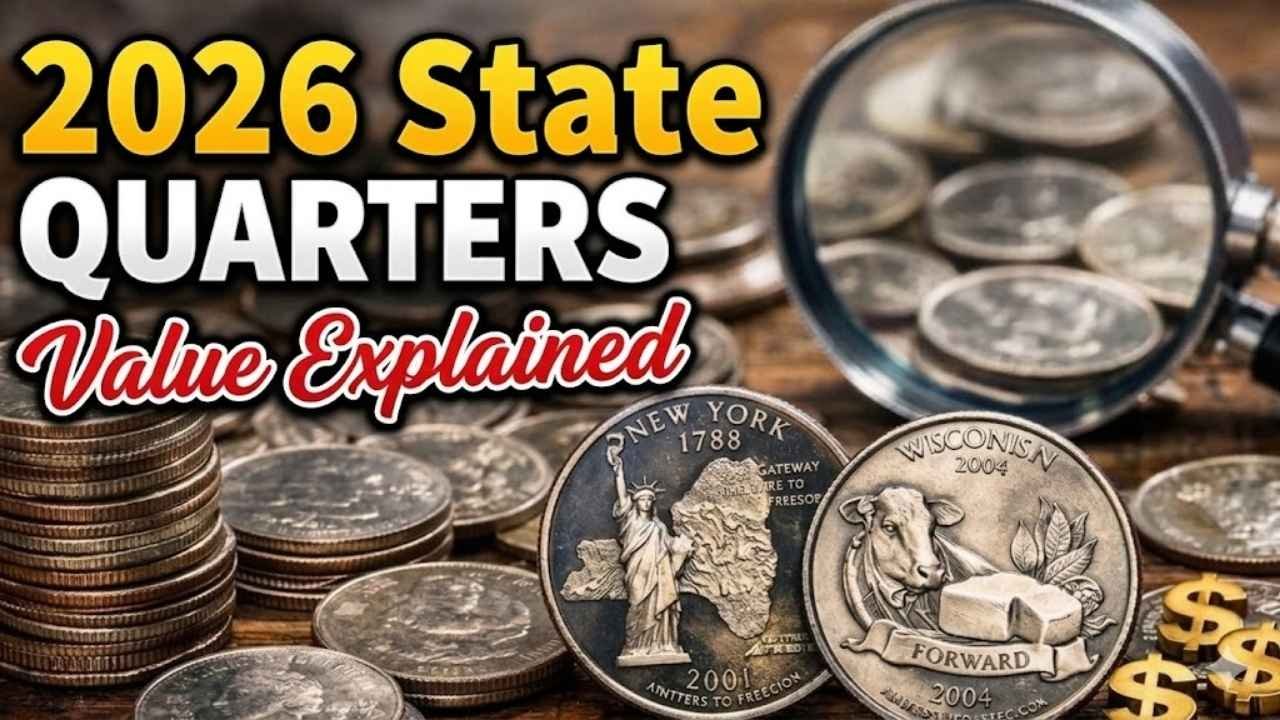
The State Quarters program remains one of the most celebrated coin series in American history. Launched in 1999 and completed in 2008, it introduced fifty unique designs representing each state. Even years after the program ended, collectors continue to treasure these coins for their artistry, historical significance, and potential value. In 2026, more than a decade of collecting insights has shaped how enthusiasts view the market, making it an exciting time to revisit the value of State Quarters and explore rare finds that stand out.
The Story Behind State Quarters
The program was created to spark interest in coin collecting and celebrate the diversity of the United States. Each quarter featured a reverse design chosen to highlight a state’s history, culture, or landmarks. From Delaware’s Caesar Rodney on horseback to Hawaii’s King Kamehameha, the series offered a miniature tour of America. The coins were minted in Philadelphia and Denver, with proof versions struck in San Francisco. Their popularity was immense, with millions of Americans saving quarters from circulation and purchasing collector sets.
Collecting Trends Over 11 Years
Since the program ended, collectors have spent more than a decade analyzing values and trends. Early enthusiasm led to widespread hoarding, but over time, the market matured. Common circulated quarters remain easy to find, while pristine uncirculated and proof coins have become more desirable. Error coins, such as double strikes or off‑center issues, have proven especially valuable. Collectors now focus on building complete sets, grading coins for condition, and identifying rare varieties that command higher prices.
Rare Finds That Stand Out
While most State Quarters are worth face value, certain rare examples have captured attention. Some of the most notable include:
- Wisconsin quarter with extra leaf varieties, showing an additional design element on the corn stalk.
- Minnesota quarter with multiple double die varieties, creating doubled images of trees.
- Kansas quarter with the “In God We Rust” error, caused by a weak strike on the letter T.
- Proof quarters struck in silver, offering both rarity and intrinsic metal value.
These coins are highly sought after and can sell for significant amounts depending on condition and demand.
Value Guide for 2026
The value of State Quarters in 2026 depends on several factors, including rarity, condition, and whether the coin is circulated or uncirculated. Here is a general overview:

- Circulated common quarters: usually worth 25 cents to a few dollars if in better condition.
- Uncirculated quarters: often valued between $1 and $5, with higher grades commanding more.
- Proof quarters: typically range from $3 to $15, with silver proofs valued higher.
- Rare error coins: can sell for $50 to several hundred dollars depending on the variety.
- Complete sets: a full set of all fifty states in uncirculated or proof condition can be worth $100 to $300 or more.
Professional grading services add credibility and can significantly increase a coin’s market value.
Tips for Collectors
For those interested in collecting State Quarters, a few strategies can help maximize enjoyment and value:
- Search bank rolls and circulation for overlooked varieties.
- Invest in protective holders or albums to preserve condition.
- Learn the basics of coin grading to identify higher‑value pieces.
- Stay informed about auction results and collector forums to track market trends.
- Consider building complete sets, which often hold more appeal than individual coins.
Collecting is not only about profit but also about appreciating the artistry and history behind each design.
The Legacy of State Quarters
The State Quarters program achieved its goal of inspiring millions to take an interest in numismatics. It remains one of the most successful coin programs in U.S. history, with many people recalling the excitement of finding new designs in their pocket change. In 2026, the legacy continues as collectors pass down sets to younger generations, ensuring that the coins remain a cherished part of American culture.

Key Highlights
- State Quarters program ran from 1999 to 2008, featuring fifty unique designs.
- Collecting trends over 11 years show growing interest in uncirculated and proof coins.
- Rare varieties include Wisconsin extra leaf, Minnesota double dies, and Kansas “In God We Rust.”
- Values in 2026 range from face value for common coins to hundreds of dollars for rare errors.
- Complete sets in high grade remain popular among collectors.
- The program’s legacy continues to inspire new generations of coin enthusiasts.
Final Words
The State Quarters program may have ended years ago, but its impact is still felt strongly in 2026. Collectors continue to seek out rare finds, preserve complete sets, and share their passion with others. Whether you are searching for a valuable error coin or simply enjoying the artistry of each design, State Quarters offer a rewarding journey through America’s history. Their enduring popularity proves that even small coins can carry immense cultural and collectible value.