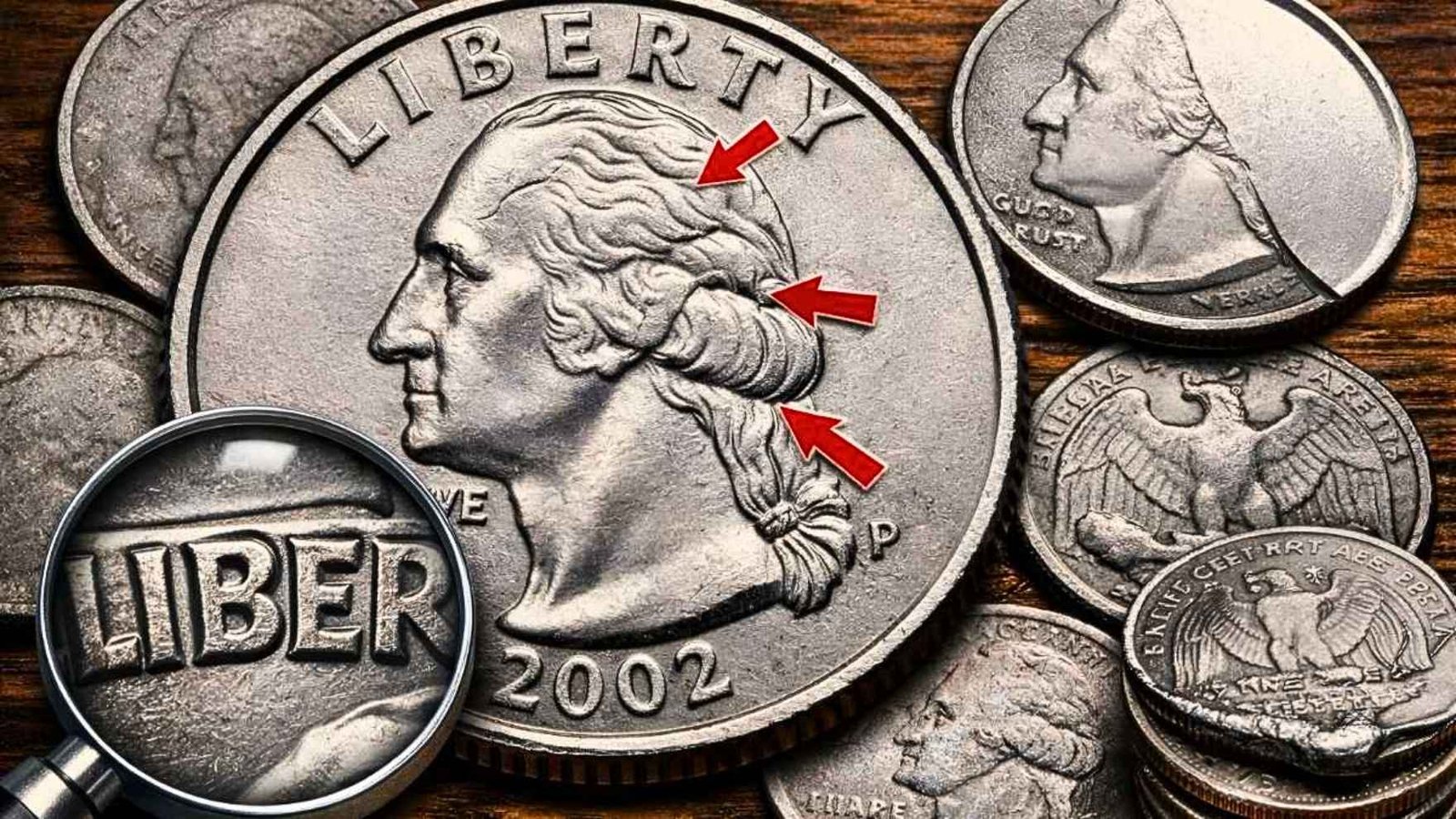
The 2002 State Quarters are part of the celebrated 50 State Quarters Program, which ran from 1999 to 2008. Each year, five new designs were released to honor different states, and millions of coins entered circulation. While most of these quarters are common and worth face value, certain 2002 issues contain rare errors and varieties that have become highly collectible. In 2026, these coins continue to attract attention, with some examples worth far more than their face value. Understanding how to identify these errors is essential for collectors and investors.
The 2002 State Quarters
In 2002, the U.S. Mint released quarters for Tennessee, Ohio, Louisiana, Indiana, and Mississippi. Each design reflects the unique heritage and history of its state. These coins were struck at the Philadelphia and Denver mints, with proof versions produced at the San Francisco Mint. While millions were made, error coins from this year stand out as hidden treasures.
Common Errors Found in 2002 Quarters
Error coins occur when mistakes happen during the minting process. For 2002 quarters, collectors have identified several types of errors:
- Doubled die obverse or reverse, where letters or design elements appear doubled.
- Off-center strikes, where the design is misaligned.
- Clipped planchets, where part of the coin is missing due to a cutting error.
- Wrong planchet strikes, where a quarter design is struck on a coin blank meant for another denomination.
These errors are rare and can command significant premiums depending on severity and condition.

Famous Varieties
Among the 2002 quarters, certain varieties are especially notable. For example, doubled die varieties on the Ohio and Indiana quarters have been reported, showing clear doubling in the inscriptions. Proof coins from San Francisco with cameo or deep cameo finishes are also highly prized. Collectors pay close attention to details such as lettering, date placement, and strike quality when searching for varieties.
Value Chart Overview
Most 2002 quarters in circulated condition are worth face value. Uncirculated examples can range from $1 to $5, depending on grade. Proof coins may be worth $10 to $20 or more. Error coins, such as doubled dies or off-center strikes, can fetch $50 to several hundred dollars depending on rarity and condition. Wrong planchet errors are especially valuable, sometimes reaching thousands at auction.

Collecting Tips
For those interested in 2002 quarters, condition is critical. Coins should be stored properly to prevent tarnish or damage. Beginners may start by collecting circulation strikes, while advanced collectors often seek out rare varieties and error coins. Certification by a reputable grading service adds credibility and can increase value. Searching through rolls of quarters or proof sets may yield hidden treasures.
Investment Potential
The 2002 State Quarters offer both collectible appeal and investment potential. Their rare errors and varieties have shown strong growth in value over the years. As demand continues to grow, prices for these coins have steadily increased. While not every coin will yield a fortune, the right piece can be a valuable addition to any portfolio. Collectors who understand the market trends and focus on rarity often see strong returns over time.

Key Highlights
- The 2002 State Quarters include Tennessee, Ohio, Louisiana, Indiana, and Mississippi.
- Common errors include doubled dies, off-center strikes, clipped planchets, and wrong planchet strikes.
- Proof coins from San Francisco are especially desirable.
- Circulated examples are worth face value, while uncirculated and proof coins hold added value.
- Rare error coins can be worth hundreds or even thousands depending on condition.
Final Words
The 2002 State Quarters may seem ordinary at first glance, but their rare errors and varieties reveal hidden treasures. From doubled dies to wrong planchet strikes, these coins continue to captivate collectors in 2026. Whether you are a seasoned numismatist or a beginner, exploring 2002 quarters offers both enjoyment and the potential for discovery. With patience and knowledge, you may uncover a coin that is worth far more than its face value, proving that even modern coins can hold unexpected rarity.