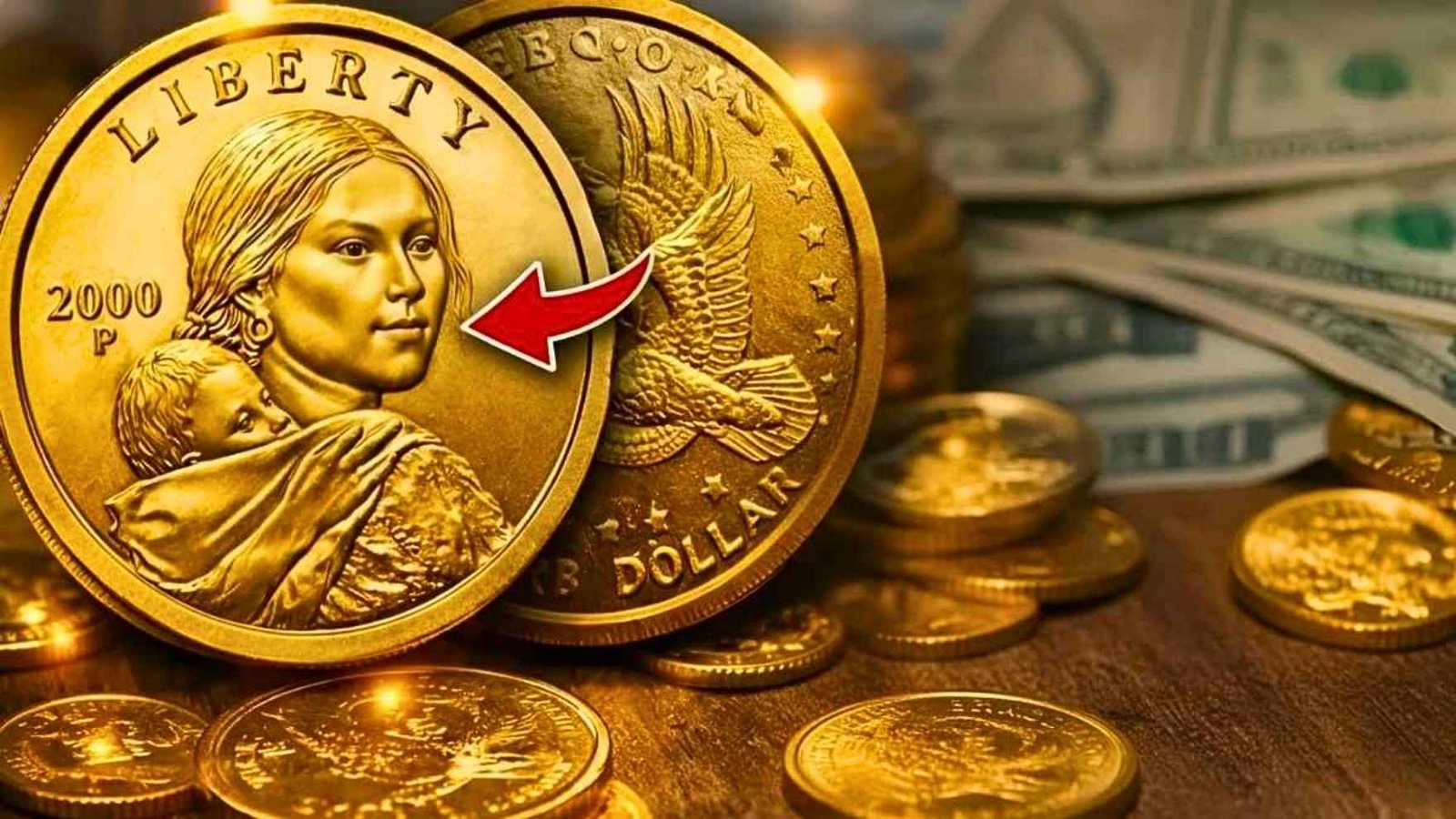
The Sacagawea Dollar, first introduced in 2000, was designed to honor Sacagawea, the Shoshone woman who played a vital role in guiding the Lewis and Clark expedition. With its golden color and distinctive design, the coin was meant to replace the Susan B. Anthony Dollar and encourage wider use of dollar coins in circulation. While most Sacagawea Dollars are common and worth face value, certain rare errors and varieties from the year 2000 have become highly collectible. In 2026, these coins continue to attract attention, with some commanding impressive premiums in the numismatic market.
The History of the Sacagawea Dollar
The Sacagawea Dollar was designed by Glenna Goodacre, featuring Sacagawea carrying her infant son, Jean Baptiste, on the obverse. The reverse, designed by Thomas D. Rogers, depicts a soaring eagle surrounded by seventeen stars, symbolizing the states at the time of the Lewis and Clark expedition. The coin was struck in a manganese-brass alloy, giving it a golden appearance. Despite its beauty, the coin struggled to gain popularity in circulation, but it quickly became a favorite among collectors.
The 2000 Issue
The first year of issue, 2000, is particularly significant for collectors. Millions were minted at both the Philadelphia and Denver mints, and proof coins were struck at the San Francisco Mint. While most examples are common, several rare errors and varieties from this year have elevated the coin’s status in numismatics.
Famous Errors
One of the most famous errors involving the 2000 Sacagawea Dollar is the “Cheerios Dollar.” In early 2000, General Mills included special Sacagawea Dollars in Cheerios cereal boxes as part of a promotion. These coins were struck with a prototype reverse design featuring enhanced eagle tail feathers. Only a few thousand were distributed, making them extremely rare and valuable today. Another notable error is the mule coin, which features a Sacagawea Dollar obverse paired with a Washington Quarter reverse. These mule errors are among the most famous modern U.S. coin errors and can be worth tens of thousands of dollars.
Varieties and Mint Marks
Collectors also pay attention to mint marks and varieties. The 2000-P and 2000-D issues are common, but high-grade examples certified by professional grading services can command premiums. Proof coins from the San Francisco Mint are especially desirable, particularly those with cameo or deep cameo finishes. The Cheerios Dollar and mule errors remain the most sought-after varieties, but other minor doubled die and striking anomalies also attract collector interest.
Value Chart Overview
Most 2000 Sacagawea Dollars in circulated condition are worth only face value. Uncirculated examples can range from $2 to $5, depending on grade. Proof coins may be worth $10 to $20 or more. Cheerios Dollars can command thousands, with some selling for over $25,000 depending on condition. Mule errors are even more valuable, with auction records exceeding $100,000. These rare varieties highlight the potential hidden in what might otherwise seem like ordinary coins.
Collecting Tips
For those interested in Sacagawea Dollars, condition is critical. Coins should be stored properly to prevent tarnish or damage. Proof and special varieties are best preserved in their original packaging. Beginners may start by collecting circulation strikes, while advanced collectors often seek out rare varieties and error coins. Certification by a reputable grading service adds credibility and can increase value. Building a complete set of Sacagawea Dollars from 2000 onward can be a rewarding challenge that connects collectors to a unique chapter in American coinage.
Investment Potential
The 2000 Sacagawea Dollar offers both collectible appeal and investment potential. Its rare errors and varieties, such as the Cheerios Dollar and mule coins, have shown strong growth in value over the years. As demand continues to grow, prices for these rare coins have steadily increased. While not every coin will yield a fortune, the right piece can be a valuable addition to any portfolio. Collectors who understand the market trends and focus on rarity often see strong returns over time.
Key Highlights
- The Sacagawea Dollar was introduced in 2000 to honor Sacagawea and her role in American history.
- The 2000 issue includes coins from Philadelphia, Denver, and San Francisco.
- Famous errors include the Cheerios Dollar with prototype eagle feathers and mule coins with a Washington Quarter reverse.
- Circulated examples are worth face value, while uncirculated and proof coins hold added value.
- Rare varieties such as Cheerios Dollars and mule errors can be worth tens of thousands of dollars.
Final Words
The 2000 Sacagawea Dollar may seem ordinary at first glance, but its rare errors and varieties reveal hidden treasures. From the Cheerios Dollar to the mule coin, these pieces continue to captivate collectors in 2026. Whether you are a seasoned numismatist or a beginner, exploring Sacagawea Dollars offers both enjoyment and the potential for discovery. With patience and knowledge, you may uncover a coin that is worth far more than its face value, proving that even modern coins can hold unexpected rarity.