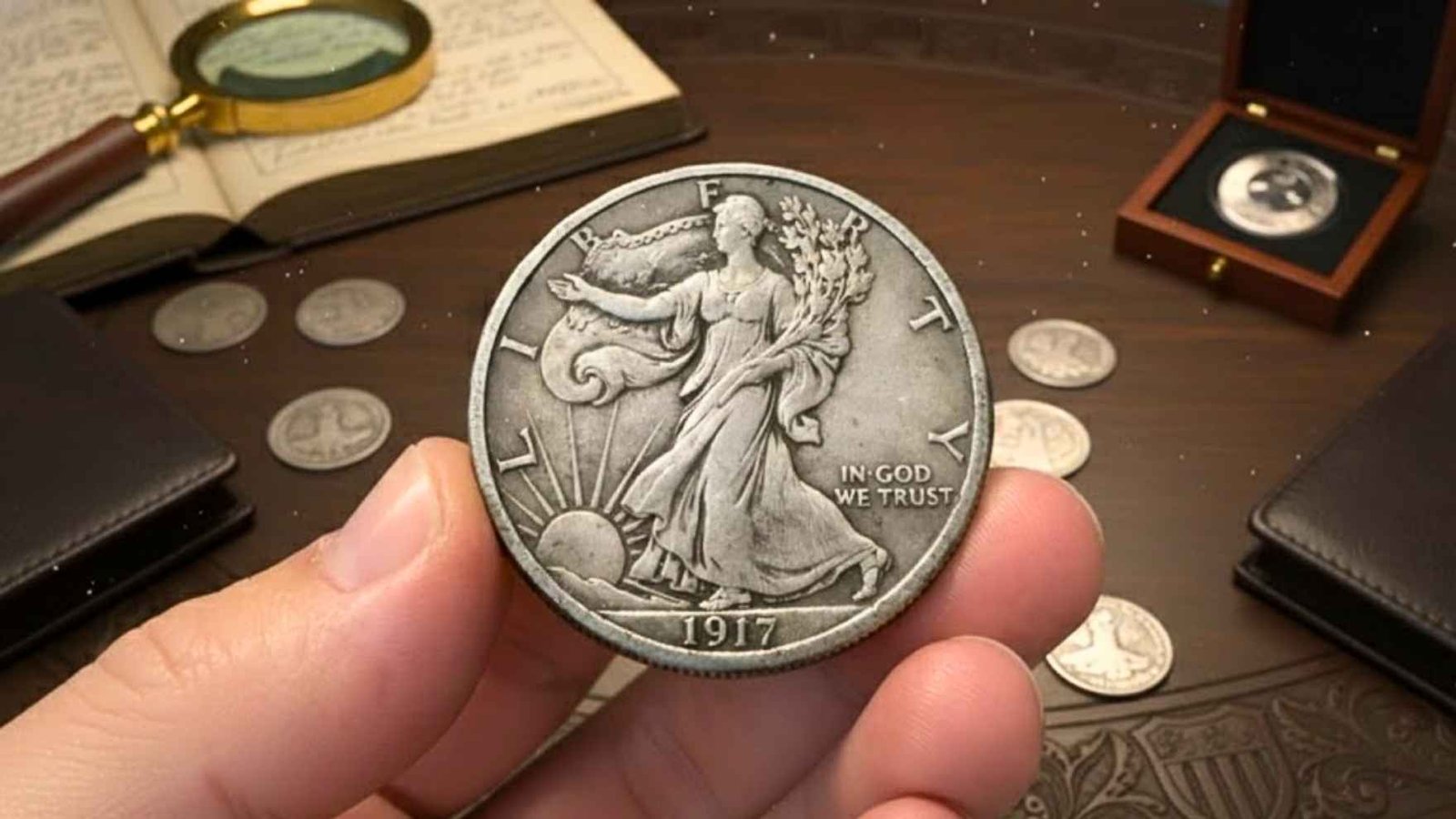
The Walking Liberty Half Dollar is one of the most admired coins in American history. Minted from 1916 to 1947, it features a striking design that has captivated collectors for generations. Among its many issues, the 1917 Walking Liberty Half Dollar stands out as a coin that continues to attract attention in 2026. Despite being over a century old, examples of this coin are still found today, making it a fascinating piece for both collectors and investors.
The History of the Walking Liberty Half Dollar
The Walking Liberty Half Dollar was designed by Adolph A. Weinman, whose artistry gave the coin its timeless appeal. The obverse depicts Lady Liberty striding toward the sunrise, draped in the American flag, while the reverse features a powerful eagle perched on a rock. Introduced in 1916, the coin replaced the Barber Half Dollar and quickly became a symbol of American strength and optimism during a turbulent era.

The 1917 Issue
The 1917 Walking Liberty Half Dollar was struck at three mints: Philadelphia (no mint mark), Denver (D), and San Francisco (S). It was the second year of issue, and millions were produced. However, coins from this year are especially interesting because they include both obverse and reverse mint mark placements. Early 1917 coins had mint marks on the obverse, while later issues moved the mint mark to the reverse. This distinction makes the 1917 issue unique among Walking Liberty Half Dollars.
Mint Marks and Varieties
Collectors pay close attention to mint marks when evaluating 1917 Walking Liberty Half Dollars. The 1917-D and 1917-S with obverse mint marks are scarcer and more valuable than their reverse mint mark counterparts. Philadelphia issues, lacking a mint mark, are more common but still desirable in high grades. The placement of the mint mark adds an extra layer of collectibility, making the 1917 issue a favorite among enthusiasts.
Value of the 1917 Walking Liberty Half Dollar
The value of a 1917 Walking Liberty Half Dollar depends heavily on condition and mint mark placement. Circulated examples may be worth $20 to $50, while uncirculated specimens can fetch hundreds. Coins with obverse mint marks in high grades are especially valuable, sometimes reaching thousands. Proof-like examples or coins with exceptional eye appeal are prized by collectors and investors alike.
Rarity and Demand
Although millions were minted, the survival rate of 1917 Walking Liberty Half Dollars in high grades is relatively low. Many coins were heavily circulated, resulting in wear and loss of detail. As a result, uncirculated examples are scarce and command strong premiums. Demand has remained steady over the years, and in 2026, collectors continue to seek out these coins for their beauty and historical significance.

Collecting Tips
For those interested in Walking Liberty Half Dollars, condition is critical. Coins should be stored properly to prevent tarnish or damage. Beginners may start by collecting common dates, while advanced collectors often seek out rare varieties and high-grade examples. Certification by a reputable grading service adds credibility and can increase value. Building a complete set from 1916 to 1947 can be a rewarding challenge that connects collectors to a unique chapter in American history.
Investment Potential
The 1917 Walking Liberty Half Dollar offers both collectible appeal and investment potential. Its unique mint mark varieties and historical significance make it a solid choice for collectors. As demand continues to grow, prices for high-grade examples have steadily increased. While not every coin will yield a fortune, the right piece can be a valuable addition to any portfolio.

Key Highlights
- The Walking Liberty Half Dollar was introduced in 1916 and designed by Adolph A. Weinman.
- The 1917 issue includes both obverse and reverse mint mark placements, making it unique.
- Coins were struck at Philadelphia, Denver, and San Francisco mints.
- Circulated examples are worth $20 to $50, while uncirculated coins can fetch hundreds or more.
- Obverse mint mark varieties are scarcer and more valuable than reverse mint mark issues.
Final Words
The 1917 Walking Liberty Half Dollar remains one of the most captivating coins in American numismatics. More than a century after its minting, it continues to be found and cherished by collectors. In 2026, values remain strong, with rare varieties and high-grade examples commanding impressive prices. Whether you are a seasoned numismatist or a beginner, exploring the 1917 Walking Liberty Half Dollar offers both enjoyment and the potential for discovery. With patience and knowledge, you may uncover a coin that is worth far more than its face value, proving that hidden treasures still exist in the world of coin collecting.